Retrofit Solutions for Existing System and Performance Enhancement in Maharashtra
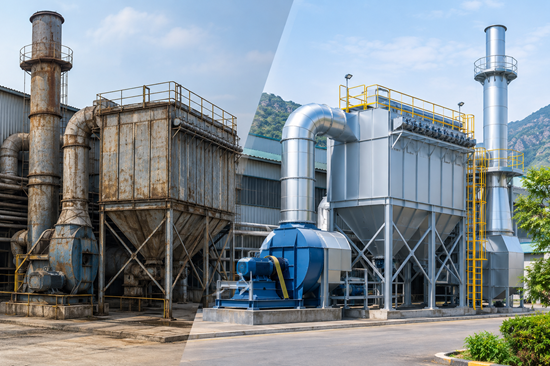

Retrofit solutions for existing air pollution control systems — Batliboi Environmental Engineering Group
Most plants in Maharashtra already own an air pollution control system. The question many of them face today is not "what should we buy?" but "why is what we have no longer enough?" Emission norms tighten, production is pushed above original design, filter bags and internals age, and the system that passed inspection a decade ago now struggles. Replacing it outright means large capital spend and a long shutdown. For many plants there is a better route: retrofit.
This guide explains what retrofit and performance enhancement actually involve, how to tell whether your system is a good candidate, and how to run the project so that it delivers measurable results.
What Are Retrofit Solutions for Performance Enhancement?
Retrofit solutions upgrade existing industrial systems, such as air pollution control devices, to boost efficiency, ensure compliance, enhance reliability and reduce costs, without full replacement. The existing structure, housings and foundations stay in service. What changes are the components, controls and design details that limit performance.
A well-run retrofit is targeted. It starts from a measured gap in the current system and addresses that gap specifically, rather than applying a standard upgrade package.
Why Maharashtra Plants Are Turning to Retrofit
- Stricter norms. Retrofit helps existing equipment meet new or stricter environmental standards, such as limits on PM2.5, SOx, NOx and VOC, without a full replacement. It also avoids regulatory penalties and supports permit renewals.
- MPCB scrutiny at consent renewal. Maharashtra Pollution Control Board consent conditions are reviewed against measured performance. A system that was adequate at commissioning may not be adequate today.
- Ageing plant base. Maharashtra has many established plants in MIDC estates and industrial belts, where equipment has been running for years and production has often grown beyond the original design.
- Space limits. Older layouts rarely have room for a second, larger system. Upgrading within the existing footprint is often the only practical option.
- Shutdown cost. Retrofitting typically involves less downtime and disruption than installing a new system, which matters most for continuous-process plants.
- Capital discipline. A retrofit is a cost-effective alternative to replacement when the core system is structurally sound.
8 Signs Your System Is a Candidate for Retrofit
- Emission readings are drifting upward or approaching consent limits.
- Pressure drop keeps rising, or the cleaning system can no longer keep it in range.
- Filter bags or cartridges fail early, or media is replaced more often than planned.
- Fan power has crept up while performance has not improved.
- Visible dust leaks from housings, hoppers, doors or ducting.
- Production has increased beyond the system's original design capacity.
- Corrosion or wear is damaging internals, hoppers or ducts.
- Controls are manual or outdated, with no data logging or remote monitoring.
If two or three of these apply, an audit is worth doing before any replacement decision.
Retrofit Options by Equipment Type
The right upgrade depends on the equipment and its failure mode. Typical areas that are evaluated include:
| Equipment | Common Performance Problems | Typical Retrofit Options Evaluated |
|---|---|---|
| Electrostatic Precipitator (ESP) | Falling collection efficiency, uneven gas flow, worn internals, ageing controls | Controller and power supply upgrades, electrode and rapping system refurbishment, gas distribution correction, added collection capacity, or conversion toward a hybrid filter arrangement |
| Bag filter / RABH | High pressure drop, short bag life, leaks, inefficient cleaning | Higher-performance filter media, cage and venturi replacement, cleaning system and controller upgrade, hopper and seal repair |
| Cartridge filter | Clogging, rising pressure drop | Media upgrade, pulse cleaning system and sensor upgrade |
| Scrubbers | Poor absorption, scaling, carry-over | Nozzle and internals upgrade, mist eliminator improvement, liquid circulation changes |
| Fans and blowers | High energy use, vibration, flow mismatch | Impeller and motor improvement, variable speed drive, re-rating to current duty |
| Hoods and ducting | Fugitive emissions, settling, wear | Hood redesign, duct modification, wear protection |
| Controls and monitoring | Manual operation, no data | Automation, differential pressure monitoring, data logging, emission monitoring integration |
Retrofitting also allows older systems to integrate with modern automation and monitoring, which improves process control and data logging. That data is increasingly useful at inspection time.
The Retrofit Process, Step by Step

Batliboi EEG retrofit and performance enhancement process diagram

Step 1: Audit. The existing system is inspected and tested while running where possible. This includes measuring flow, pressure drop, emissions, and inspecting internals during a stop.
Step 2: Diagnose. The audit data is used to locate the actual gap, whether that is efficiency, pressure drop, leakage, airflow distribution or control. Guessing at this stage is the most common cause of disappointing retrofits.
Step 3: Evaluate options. Refurbishment, component upgrade, added capacity and technology conversion are compared against the performance target and the available shutdown time.
Step 4: Retrofit or replace. If the core structure is sound, retrofit is usually the better route. If damage or design limits are beyond what upgrades can recover, replacement is the honest recommendation.
Step 5: Engineer and plan. Detailed design, material procurement and a shutdown schedule are prepared so that on-site work fits the available window.
Step 6: Install and commission. Work is carried out within the planned shutdown, then the system is brought back online and tuned.
Step 7: Performance test. Emissions and pressure drop are verified against the target set in step 2, so the result is proven, not assumed.
Step 8: Monitor and maintain. Monitoring and an AMC agreement keep the gains in place over time.
Retrofit or Replace? A Decision Framework
| Factor | Points Toward Retrofit | Points Toward Replacement |
|---|---|---|
| Structure | Housings, foundations and casing are sound | Severe corrosion or structural damage |
| Capacity gap | Shortfall can be closed with upgrades | Required capacity is far beyond the footprint |
| Technology fit | Current technology still suits the dust or gas | The technology itself is wrong for the process |
| Downtime | Short planned shutdown available | Long outage is acceptable or unavoidable |
| Space | No room for a new system | Space is available for a new installation |
| Budget | Limited capital, need for faster payback | Capital available for a long-life asset |
| Regulation | Gap to the new limit is moderate | Limits require a different technology |
Where plants have chosen the wrong technology originally, such as a dry collector on sticky tar-laden gas, retrofit cannot fix it. For guidance on matching technology to process, see our guides on choosing between Pulsejet Bag Filter and RABH and on Wet ESP versus Dry ESP.
Key Advantages of Retrofitting
- Cost-effective alternative to replacement.
- Enhanced efficiency and performance. Better pollutant capture, reduced energy consumption, or higher throughput.
- Compliance with updated regulations, while avoiding penalties and supporting permit renewals.
- Improved process integration with modern automation and monitoring.
- Shorter downtime compared with full replacement.
- Customised solutions tailored to specific plant conditions, pollutants or performance gaps, rather than an off-the-shelf replacement.
Industries That Benefit
Retrofit solutions serve Cement, Steel, Power, Mining and Minerals, Oil & Gas, Fertilizers, Sugar, Carbon Black and Hydrocarbon, Palm Oil, Chemicals, Solar and Semiconductor, and Pharmaceutical industries. In Maharashtra, the largest retrofit demand typically comes from cement, steel and power plants, where equipment is large, continuous and subject to regular emission review.
Retrofit applications in Cement industry Retrofit applications across Cement, Steel, Power and process industries — Batliboi Environmental Engineering Group

Planning a Retrofit in Maharashtra: Practical Points
- Align work with planned shutdowns. Plan around annual maintenance windows so that equipment, materials and crews are ready before the stop begins.
- Set a measurable target first. Agree the emission level, pressure drop or power figure the retrofit must achieve, and how it will be measured.
- Keep MPCB documentation in view. Record before-and-after performance data to support consent renewal.
- Use local support. Site visits, spares and service close to the plant reduce delays during a short shutdown.
- Check interfaces. Ducting, fans, dampers and controls often affect results as much as the collector itself.
Choosing a Retrofit Partner: Checklist
- Do they audit before they quote, or quote from a catalogue?
- Will they set a performance target and test against it after the work?
- Can they work on equipment from other makers, not only their own?
- Do they manufacture the components in-house, to control quality and lead time?
- Can they work within a tight shutdown window?
- Do they offer spares and AMC support after handover?
- Will they tell you honestly when replacement is the better option?
Batliboi EEG: Retrofit and Performance Enhancement
Batliboi Environmental Engineering Group provides retrofit solutions that upgrade existing air pollution control systems without full replacement, tailored to each plant's conditions, pollutants and performance gaps. With in-house manufacturing, 500+ successful pollution control projects, and APC spares and services support, Batliboi EEG can take a system from audit through to upgrade and ongoing maintenance for plants across Maharashtra.
Explore the Retrofit Solutions page or get in touch to arrange an assessment of your existing system.
Frequently Asked Questions
1. What is a retrofit solution for an air pollution control system? A retrofit upgrades an existing system, such as an ESP, bag filter or scrubber, to improve efficiency, compliance, reliability and cost, without replacing the whole installation. Components, controls and design details that limit performance are upgraded while the main structure stays in service.
2. Is retrofit cheaper than replacing the system? Retrofit is generally a cost-effective alternative to replacement, with shorter downtime, provided the core structure is sound. If the system is badly damaged or the technology is wrong for the process, replacement may be the better long-term choice.
3. Can a retrofit help us meet stricter emission norms? Yes. Retrofit can help existing equipment meet new or stricter standards, such as PM2.5, SOx, NOx and VOC limits, without full replacement. This also avoids penalties and supports permit renewals.
4. How long does a retrofit take? It depends on the scope and the equipment. Retrofits typically involve less downtime than new installations, and the work is planned to fit within an available shutdown window after an audit and detailed design.
5. Can older systems be connected to modern automation? Yes. Retrofitting allows older systems to integrate with modern automation and monitoring, improving process control and data logging, which also supports compliance records.
6. What data is needed to plan a retrofit? Current performance data, such as emissions, pressure drop, gas flow and temperature, along with equipment drawings, operating history and the target performance. An audit of the running system fills the gaps.
7. Can you retrofit equipment made by other manufacturers? A competent retrofit partner assesses the existing system on its condition and design, regardless of the original maker. Confirm this when you request a proposal.
8. Who provides APC retrofit solutions in Maharashtra? Batliboi Environmental Engineering Group provides retrofit and performance enhancement solutions for existing air pollution control systems across Maharashtra and Pan India, with in-house manufacturing and 500+ completed projects. Contact Batliboi EEG to discuss your system.